
La superposition est la difference entre quelqu’un qui porte des vetements et quelqu’un qui s’habille. C’est ce qui transforme une simple combinaison chemise-pantalon en une tenue qui parait intentionnelle, reflechie et sans effort. C’est aussi la competence la plus pratique de votre arsenal vestimentaire — maitrisez la superposition, et vous pourrez naviguer les changements de temperature, les codes vestimentaires et les transitions saisonnieres sans jamais avoir l’impression de n’avoir rien a vous mettre.
Mais la superposition est plus difficile qu’il n’y parait. Trop de couches et vous paraissez volumineux. Des tissus qui se combattent. Des proportions qui vous coupent au mauvais endroit. Des couleurs qui devraient fonctionner ensemble mais qui, d’une maniere ou d’une autre, ne le font pas. Ce guide decompose les principes, les techniques et les formules specifiques qui font fonctionner la superposition.
Les trois principes d’une bonne superposition
Principe 1 : Hierarchie du poids des tissus
La regle la plus importante de la superposition : le tissu le plus fin le plus pres du corps, le tissu le plus epais le plus loin. Ce n’est pas seulement une question d’esthetique — c’est une question de physique. Les tissus fins peuvent reposer doucement contre votre peau sans faire de plis. Les tissus plus lourds drapes sur les plus legers creent des lignes nettes.
L’ordre correct, de la peau vers l’exterieur :
- Couche de base : coton fin, soie ou merinos leger — repose contre la peau
- Couche intermediaire : popeline de coton, cachemire leger, lin, rayonne — ajoute de la chaleur et de l’interet visuel
- Couche exterieure : laine, coton epais, cuir, mailles structurees — maintient la forme et fournit la silhouette
Une erreur courante consiste a mettre un pull epais sous un blazer fin. Le resultat est un amas de tissu aux bras, une traction aux epaules et un sentiment general d’inconfort. Inversez : un pull fin sous une veste plus lourde, et soudain tout repose a plat.
Principe 2 : Jeu de proportions
La superposition cree un interet visuel par le contraste de longueur, de volume et de texture. Les tenues superposees les plus efficaces jouent avec au moins deux de ces trois dimensions.
Contraste de longueur : Un cardigan long sur un haut court sur un pantalon taille haute. Les differentes hauteurs d’ourlet creent un rythme visuel et allongent le corps.
Contraste de volume : Un col roule moulant sous un blazer surdimensionne. La tension entre l’ajuste et l’ample cree de la forme et empeche la tenue d’avoir l’air negligee.
Contraste de texture : De la soie lisse contre de la maille epaisse, du coton net contre du daim doux, du cuir brillant contre de la laine mate. La texture est l’arme secrete d’une bonne superposition — elle ajoute de la profondeur sans ajouter de volume.
Principe 3 : La regle de la troisieme piece
La formule de superposition la plus simple qui existe : n’importe quelle tenue basique de deux pieces (haut + bas) est instantanement elevee avec une troisieme piece. La troisieme piece peut etre presque n’importe quoi — un blazer, un cardigan, un gilet, une echarpe, un collier fort, une ceinture portee sur une veste.
La troisieme piece n’a pas besoin d’ajouter de la chaleur. Elle ajoute de l’intention. Elle signale que vous avez reflechi a cette tenue plutot que d’attraper les deux premieres choses que vous avez trouvees. Pour quiconque a l’impression qu’il manque quelque chose a ses tenues, la regle de la troisieme piece est generalement la reponse.
Les pieces de superposition essentielles

Avant de plonger dans les formules specifiques, etablissons l’arsenal. Voici les pieces qui meritent leur place dans une garde-robe de superposition :
Couches de base
- T-shirt en coton blanc (col rond)
- Col roule fin noir ou marine
- Caraco en soie dans un ton neutre
- Haut breton raye a manches longues
Couches intermediaires
- Pull a col rond en cachemire (gris, marine ou camel)
- Chemise en coton Oxford
- Cardigan leger
- Chemise en denim ou en chambray
Couches exterieures
- Blazer en laine ou lin non double
- Trench-coat classique
- Cardigan ou coatigan en grosse maille surdimensionne
- Perfecto en cuir ou en daim
- Manteau en laine structure
Formules de superposition par saison
Printemps : le juste milieu de la transition
Le printemps est l’habitat naturel de la superposition. Les matins sont frais, les apres-midi sont chauds, les soirees redescendent. Vous avez besoin d’un systeme qui s’adapte.
Formule 1 : Le combo trench classique T-shirt blanc + jean droit + cachemire leger (drape sur les epaules) + trench + baskets blanches. Retirez le trench quand il se rechauffe. Nouez le pull sur les epaules quand vous n’en avez pas besoin.
Formule 2 : Blazer et soie Caraco en soie + blazer decontracte + pantalon taille haute + mocassins. Le caraco empeche le blazer de faire costume d’entreprise. Le blazer empeche le caraco d’etre trop denude. Ensemble ils trouvent l’equilibre parfait.
Formule 3 : Le cardigan comme veste Haut breton raye + cardigan en coton (porte ouvert) + jean large crop + ballerines. Le cardigan remplace une veste quand il fait trop chaud pour un vrai manteau mais trop frais pour les bras nus.
Ete : des couches pour le controle du climat
La superposition estivale semble contre-intuitive, mais elle est essentielle pour naviguer la climatisation agressive, la protection solaire et les baisses de temperature du soir.
Formule 1 : Le costume d’ete Blazer et short en lin assortis + t-shirt blanc + sandales. Le blazer est assez leger pour l’ete mais offre une couverture quand il le faut. Roulez les manches pour un air encore plus decontracte.
Formule 2 : La chemise surdimensionnee Caraco en soie + chemise en popeline surdimensionnee (portee ouverte comme une veste) + pantalon en lin + sandales plates. La chemise offre une protection solaire et une defense contre la climatisation sans ajouter de chaleur.
Formule 3 : La couche du soir Robe d’ete en coton + cardigan en coton fin (drape sur les epaules) + sandales en cuir. Le cardigan s’enleve pendant la journee, se remet au coucher du soleil. Nouez-le sur les epaules pour une touche BCBG.
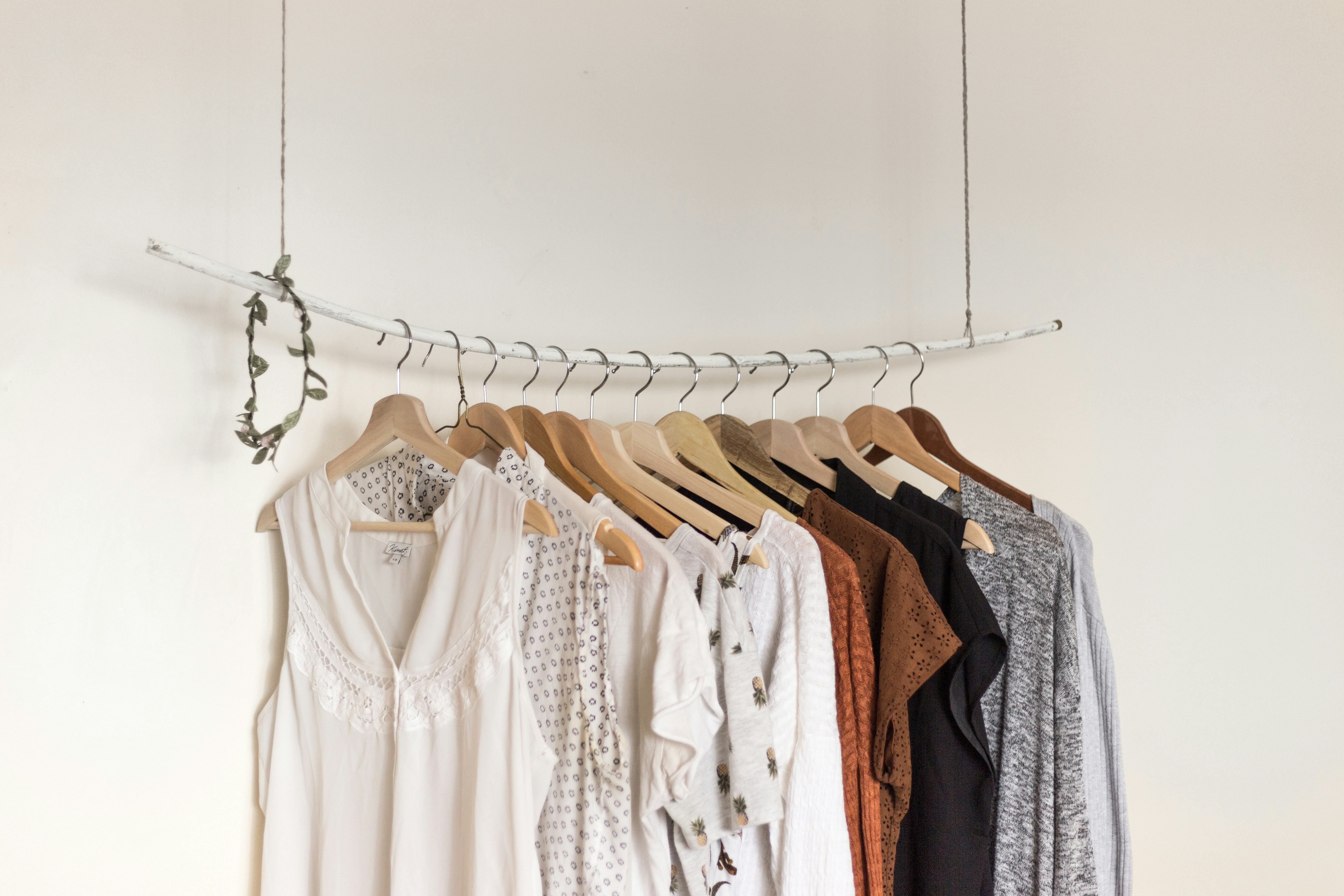
Automne : la saison de superposition par excellence
L’automne est le moment ou la superposition brille vraiment. Les temperatures exigent plusieurs pieces, et les textures des tissus d’automne — laine, cachemire, cuir, daim — se completent magnifiquement.
Formule 1 : Col roule et blazer Col roule fin noir + chemise Oxford blanche (col et poignets visibles) + blazer en laine gris + denim fonce + bottines. Un classique pour une bonne raison. Le detail du double col est discretement sophistique.
Formule 2 : Grosse maille et jupe fluide Caraco en soie + pull en grosse maille torsadee + jupe en satin coupee en biais + bottes hautes. Le contraste entre la maille epaisse et le satin fluide est ce qui fait fonctionner l’ensemble. Gardez le pull legerement court ou a demi-rentre.
Formule 3 : Cuir et cachemire Col rond en cachemire + perfecto en cuir + jean droit + mocassins. La douceur du cachemire contre le caractere brut du cuir cree une tension naturelle. C’est un uniforme de week-end qui ne vieillit jamais.
Hiver : chaleur sans volume
La superposition hivernale est la plus difficile a reussir car la chaleur exige plus de pieces, mais plus de pieces risquent de creer du volume. La solution est des choix de tissus strategiques.
Formule 1 : La trinite thermique Sous-couche en laine merinos + col roule en cachemire + manteau en laine + pantalon de tailleur + bottes hautes. La couche en merinos est invisible mais ajoute une chaleur significative sans volume. Cette tenue peut gerer des temperatures bien en dessous de zero.
Formule 2 : Pull sur chemise boutonnee Chemise en coton Oxford + pull a col rond en laine Shetland + gilet matelasse + pantalon en velours cotele + bottes en cuir. Le gilet est le heros meconnu de la superposition hivernale — il ajoute de la chaleur au niveau du tronc tout en laissant les bras libres de bouger.
Formule 3 : La robe et les couches Robe midi en melange laine + col roule fin porte en dessous + collants opaques + bottes hautes + manteau en laine. Porter un col roule sous une robe double efficacement vos options de robes d’hiver. Assurez-vous que le col roule est assez fin pour ne pas creer de bosses sous le tissu de la robe.
Les erreurs courantes de superposition
Erreur 1 : Tout au meme poids de tissu. Trois pieces de poids moyen superposees semblent volumineuses et non intentionnelles. Variez les poids — fin, moyen, epais — et soudain tout fonctionne.
Erreur 2 : Tout rentrer. Toutes les couches n’ont pas besoin d’etre rentrees. Un demi-rentre sur la couche superieure, un ourlet visible sur la couche intermediaire ou une derniere couche deliberement non rentree ajoute de la decontraction et du jeu de proportions.
Erreur 3 : Ignorer les manches. Lorsque vous superposez plusieurs pieces a manches longues, les manches doivent etre de longueurs ou de volumes differents. Une manche de col roule serree sous une manche de blazer large fonctionne. Deux manches longues fines coincees ensemble, non.
Erreur 4 : Oublier le cou. Les cols, les encolures et les details du cou sont la partie la plus visible d’une tenue superposee. Jouez avec differentes encolures — un col roule sous un col V, une chemise a col sous un col rond, un col monte sous un col ouvert. L’interaction autour du visage est ce que les gens remarquent en premier.
L’essentiel
Une bonne superposition n’est pas une question de posseder plus de vetements. Il s’agit de comprendre comment les vetements que vous possedez se rapportent les uns aux autres — comment un caraco en soie peut transformer un blazer lourd, comment un col roule fin peut doubler votre garde-robe de robes, comment une troisieme piece peut faire que deux basiques ressemblent a une tenue reflechie.
Commencez par la regle de la troisieme piece. Ajoutez une couche a ce que vous portez deja aujourd’hui. Remarquez comment cela change la tenue. C’est le debut de la maitrise de cette competence — et c’est une competence qui vous servira toute votre vie.