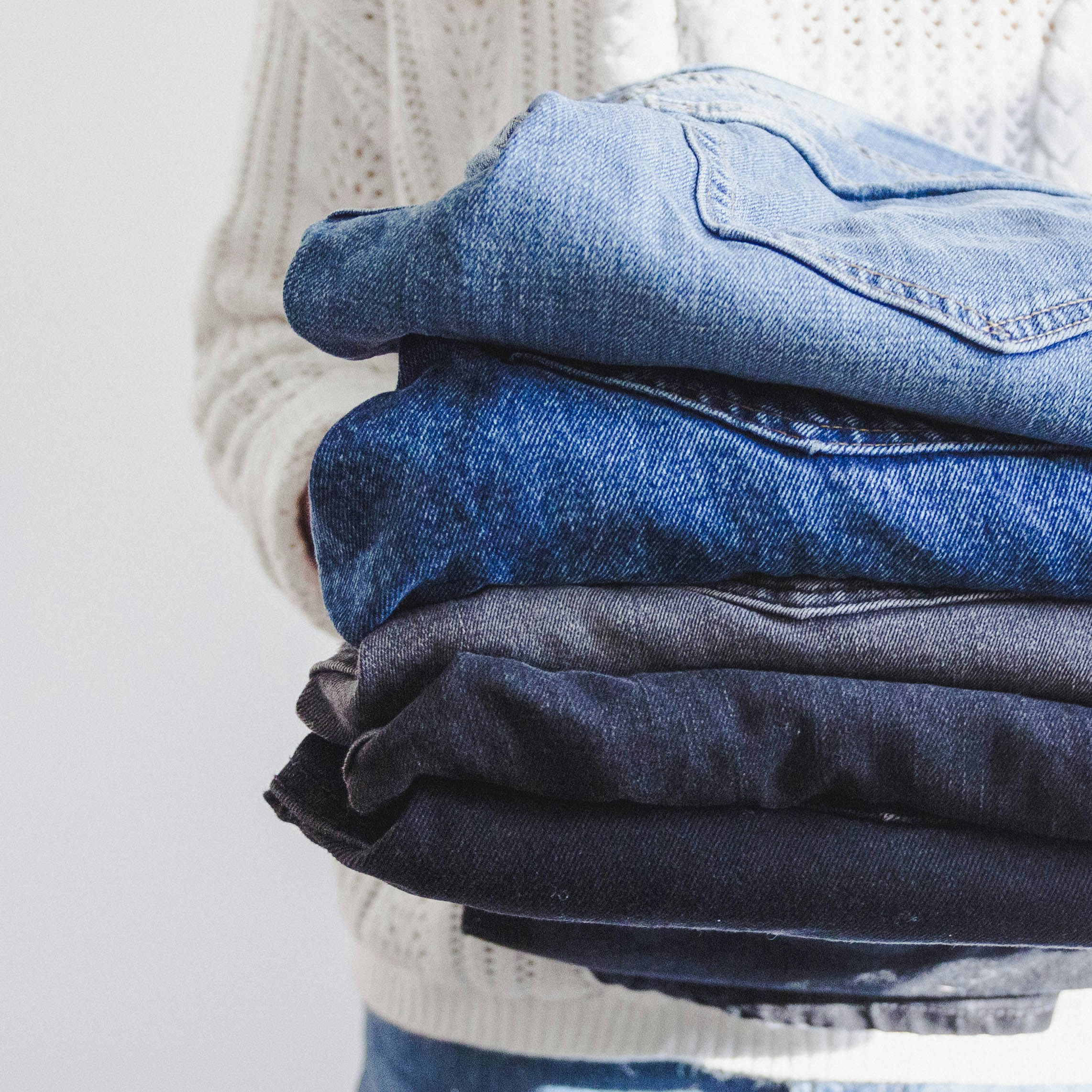
Peu de vetements suscitent autant de frustration que les jeans. L’experience de la cabine d’essayage — empiler une douzaine de paires sur son bras, se preparer a la confrontation sous lumiere fluorescente, puis les rejeter toutes — est un rite de passage quasi universel. Ce n’est pas votre corps le probleme. Ce sont les jeans. Trouver la bonne paire est difficile parce que le denim implique de multiples variables qui interagissent de maniere imprevisible : la hauteur de taille, la forme de la jambe, le poids du tissu, la teneur en elastanne, le lavage et un sizing specifique a chaque marque qui s’aligne rarement d’un fabricant a l’autre.
Ce guide decompose chaque variable qui compte pour que vous puissiez affiner votre recherche et trouver des jeans qui vous vont reellement — et que vous avez vraiment envie de porter.
Comprendre le tissu denim
Avant de parler de coupe, nous devons parler de ce qu’est reellement le denim. Les jeans sont fabriques a partir de denim, un tissu a armure sergée traditionnellement tisse a partir de 100% coton. L’armure diagonale est ce qui donne au denim sa texture caracteristique et sa durabilite. Au cours des deux dernieres decennies, le denim stretch — du coton melange a un faible pourcentage d’elastanne, de lycra ou de spandex — est devenu la norme de l’industrie.
Denim 100% coton
Sensation : Structure, substantiel, initialement raide mais s’assouplissant avec le port. Ideal pour : Les personnes qui veulent des jeans qui tiennent leur forme toute la journee, developpent un delavage unique avec le temps et durent des annees. Le compromis : L’absence de stretch signifie que la coupe est moins indulgente. Vous devez trouver la taille exacte, et les jeans necessitent une periode de rodage. Les premiers ports de denim brut ou rigide peuvent etre franchement inconfortables. Entretien : Lavez le moins possible. Nettoyez les taches, aerez et lavez seulement quand c’est vraiment sale. Chaque lavage delave legerement l’indigo, ce qui fait partie du charme.
Denim stretch (98-99% coton, 1-2% elastanne)
Sensation : Confortable des le premier port, avec une elasticite subtile qui permet le mouvement. Ideal pour : La plupart des gens, la plupart du temps. La petite quantite de stretch offre du confort sans sacrifier la sensation du denim. C’est le juste milieu pour les jeans de tous les jours. Le compromis : L’elastanne finit par se degrader, ce qui signifie que les jeans perdront leur forme avec le temps — generalement apres quelques annees de port regulier. Ils ne developperont pas le meme caractere que le denim 100% coton.
Denim hyper-stretch (teneur significative en elastanne ou polyester)
Sensation : Des leggings qui ressemblent a des jeans. Extremement confortable, presque comme un vetement de sport. Ideal pour : Quiconque privilegie le confort avant tout, ou qui a une morphologie rendant le denim rigide franchement inconfortable. Le compromis : Ces jeans se detendent aux genoux et au siege au cours de la journee parce que la haute teneur en stretch ne peut pas maintenir sa forme. Ils s’usent aussi plus vite que les alternatives a faible stretch et developpent rarement un delavage attrayant.
Les variables de coupe

La hauteur de taille : la ou le jean se pose sur votre taille
La hauteur de taille est la distance entre la couture de l’entrejambe et le haut de la ceinture. C’est la variable de coupe la plus importante car elle determine ou le jean se positionne sur votre corps et comment il interagit avec la longueur de votre torse.
Taille haute (28-33 cm) : Se pose a la taille naturelle ou au-dessus, qui est la partie la plus etroite de votre torse. Les jeans taille haute allongent les jambes, definissent la taille et sont les plus confortables en position assise car ils ne baillent pas a l’arriere. Ideal pour : la plupart des morphologies, surtout celles avec un torse long ou qui veulent une definition de taille.
Taille moyenne (23-28 cm) : Se pose juste en dessous de la taille naturelle. Les jeans taille moyenne sont les plus courants et les plus universellement portables. Ils sont confortables en position assise sans la constriction potentielle d’une taille haute.
Taille basse (18-23 cm) : Se pose sur les hanches, en dessous de la taille naturelle. Les jeans taille basse exposent plus le ventre, sont moins confortables en position assise et ont tendance a bailler a l’arriere quand on se penche. La tendance taille basse des annees 2000 n’a pas fait un retour complet, et ne le devrait probablement pas.
La forme de la jambe : la silhouette
Droit : La forme la plus intemporelle. Largeur constante du genou a la cheville, le jean droit fonctionne avec pratiquement toutes les chaussures et toutes les morphologies. Il n’est ni serre ni ample — il tombe simplement droit.
Large : Une silhouette decontractee et volumineuse qui a ete la tendance denim dominante du milieu des annees 2020. Le jean large est confortable, dramatique et fonctionne magnifiquement avec des hauts ajustes. La cle est d’avoir la bonne longueur — il doit tout juste effleurer le sol avec vos chaussures.
Slim droit : Legerement fuselé du genou a la cheville sans etre skinny. Le jean slim droit est le juste milieu pour les hommes et les femmes qui veulent une silhouette nette sans l’inconfort du denim moulant.
Skinny : Moulant de la taille a la cheville. Le jean skinny a domine les annees 2010 mais a fortement decline en popularite. Il fonctionne encore bien pour rentrer dans les bottes et pour les tenues tres decontractees, mais il n’est plus le choix par defaut.
Flare et bootcut : Ajuste a travers la cuisse et le genou, puis s’elargissant a partir du genou pour couvrir les bottes ou les chaussures. Le jean flare (elargissement spectaculaire) et le jean bootcut (elargissement subtil) allongent la jambe et equilibrent des epaules plus larges ou une poitrine plus genereuse. Ils fonctionnent mieux avec un talon ou une plateforme.
Barrel et balloon : Plus ample a travers la cuisse avec une cheville fuselée, creant une silhouette courbee et sculpturale. C’est une forme tendance qui parait intentionnelle et consciente de la mode. Elle fonctionne mieux avec un haut ajuste ou court.
Longueur d’entrejambe
L’entrejambe est la distance entre la couture d’entrejambe et l’ourlet inferieur. Avoir la bonne longueur transforme l’apparence des jeans :
Longueur totale : L’ourlet casse legerement sur la chaussure. Pour les jeans larges, l’ourlet doit tout juste effleurer le sol. Pour les jeans droits, il doit y avoir une legere cassure a l’avant ou le tissu rencontre la chaussure.
Crop : L’ourlet s’arrete 5 a 7 cm au-dessus de la cheville. Les jeans crop montrent la cheville et fonctionnent magnifiquement avec les chaussures plates, les mocassins et les sandales.
Cheville : L’ourlet arrive a l’os de la cheville ou juste au-dessus. C’est la longueur la plus universellement flatteuse pour les jeans droits et slim droits.
Lavages et couleurs
Indigo fonce : Le lavage le plus polyvalent. L’indigo fonce se lit comme soigne et peut etre habille en haut ou en bas. C’est ce que le denim fait de plus proche du formel.
Lavage moyen : Un bleu classique et decontracte qui fonctionne toute l’annee. Le lavage moyen est le plus << jeans >> de tous les lavages — c’est ce que les gens imaginent quand ils pensent au denim.
Lavage clair : Decontracte et oriente temps chaud. Les jeans en lavage clair semblent estivaux et fonctionnent magnifiquement avec des hauts blancs, creme et pastel.
Noir : Elegant et urbain. Les jeans noirs peuvent passer pour quasi formels — associez-les a un blazer noir et un haut en soie, et ils passent pour une tenue de soiree.
Blanc et creme : Des essentiels d’ete. Les jeans blancs en hiver semblent frais et inattendus. Le creme est legerement plus indulgent que le blanc eclatant.
Ecru et naturel : Denim non teint dans sa couleur naturelle de coton. Les jeans ecrus semblent eleves et luxueux — ils sont une declaration discrete de bon gout.
Comment acheter des jeans
1. Ignorez le numero de taille. Le sizing du denim est incroyablement incoherent d’une marque a l’autre. Un 28 dans une marque est un 30 dans une autre. Concentrez-vous sur la coupe, pas sur le numero sur l’etiquette.
2. Verifiez la composition du tissu. Si vous voulez des jeans qui tiennent leur forme, recherchez 98-100% coton. Si vous voulez du stretch, 1-2% d’elastanne est le juste milieu.
3. Asseyez-vous dans la cabine d’essayage. Des jeans qui vous vont parfaitement debout peuvent s’enfoncer dans votre ventre quand vous vous asseyez. Testez toujours le confort en position assise — asseyez-vous pendant au moins 60 secondes, avachissez-vous, penchez-vous en avant et assurez-vous que rien ne pince ou ne baille.
4. Verifiez la vue arriere. Utilisez le miroir a trois faces de la cabine ou l’appareil photo de votre telephone. Les poches arriere doivent se trouver au milieu de chaque fesse, ni trop haut (ce qui fait paraitre le fessier long et plat) ni trop bas (ce qui tire le regard vers le bas). L’empiècement (la couture en V sous la ceinture) doit suivre la courbe naturelle sans tirer.
5. Achetez pour votre corps actuel. Pas le corps que vous aviez l’annee derniere ni celui que vous prevoyez d’avoir le mois prochain. Les jeans qui vous vont maintenant sont des jeans que vous porterez maintenant.
Entretien du denim
La facon dont vous lavez vos jeans affecte considerablement leur duree de vie :
Lavez le moins possible. La plupart des jeans peuvent aller 5 a 10 ports entre les lavages. Nettoyez les petites taches. Aerez-les entre les utilisations. Le denim est naturellement antimicrobien, et le lavage excessif est la cause principale de la mort prematuree des jeans.
Quand vous lavez : Retournez les jeans sur l’envers, utilisez de l’eau froide, un cycle delicat et un minimum de lessive. N’utilisez jamais d’assouplissant — il recouvre les fibres et reduit la capacite du denim a respirer.
Ne mettez jamais les jeans au seche-linge. La chaleur degrade l’elastanne, retrecit le coton et provoque la decoloration. Suspendez ou sechez a plat. Vos jeans dureront des annees de plus.
Rangez plies, pas suspendus. Suspendre les jeans par la ceinture etire le tissu au point de suspension. Pliez-les plutot, ou suspendez-les par l’ourlet en utilisant des cintres a pince.
La bonne paire de jeans existe pour chaque corps. Il faudra peut-etre essayer vingt paires pour la trouver. C’est normal. Les jeans qui vous font vous sentir bien — que vous attrapez encore et encore, qui fonctionnent avec tout le reste de votre garde-robe — valent la recherche.