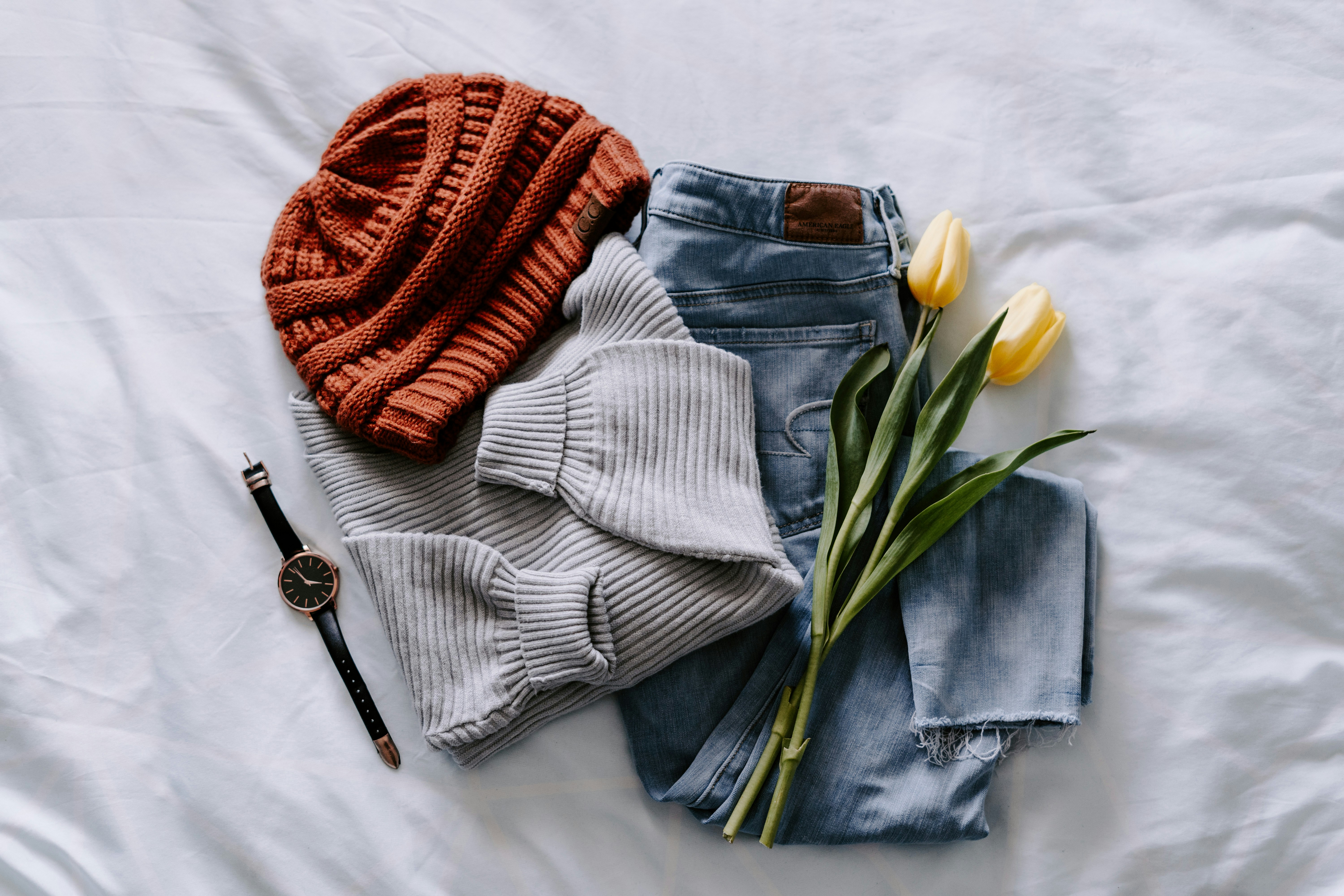
Les semaines les plus difficiles de l’annee pour s’habiller ne sont pas les profondeurs de l’hiver ni le pic de l’ete. Ce sont les semaines intermediaires — quand le calendrier dit printemps mais que la meteo insiste sur l’hiver, ou quand l’automne arrive mais que l’ete refuse de partir. Ces periodes de transition exposent toutes les faiblesses d’une garde-robe : le manteau trop lourd, la robe trop legere, les chaussures qui ne conviennent a aucune des deux possibilites.
L’habillage de transition est une competence, et comme toute competence, elle peut s’apprendre. La cle est de comprendre que s’habiller pour les intersaisons ne necessite pas une garde-robe separee pour chaque periode de transition. Il s’agit d’avoir un noyau de pieces qui font le pont entre les saisons, combine a la capacite de superposer et de s’adapter au fil de la journee.
Pourquoi l’habillage de transition est difficile
La plupart des gens possedent deux garde-robes : temps chaud et temps froid. La garde-robe temps chaud est en lin, coton, sandales et robes. La garde-robe temps froid est en laine, cachemire, bottes et manteaux lourds. Quand la temperature oscille entre 10 et 18 degres — ce qu’elle fait pendant des semaines au printemps et en automne — aucune des deux garde-robes ne fonctionne vraiment. Un manteau en laine est suffocant a midi. Une robe en lin est glaciale le soir.
La solution n’est pas une troisieme garde-robe. C’est un ensemble de pieces passerelles qui fonctionnent avec les deux, etendant leur plage utilisable de plusieurs semaines dans chaque direction.
Les pieces passerelles

Ces douze articles sont l’epine dorsale de l’habillage de transition. Vous en possedez probablement deja la plupart.
Exterieur
1. Le trench-coat. La piece de transition par excellence. Un trench est assez leger pour 15 degres mais assez substantiel pour bloquer le vent et la pluie fine. Il se superpose sur tout : un t-shirt et un jean, une robe en soie, un pull en cachemire et un pantalon. Choisissez un trench en coton double boutonnage classique en beige, marine ou olive. Ceinturez-le quand il fait frais, portez-le ouvert quand il fait doux, et jetez-le sur votre bras quand le soleil sort.
2. Une veste en jean ou en coton. Plus decontractee qu’un trench, plus substantielle qu’un cardigan. Une veste en jean en lavage moyen fonctionne sur les robes d’ete en septembre et sur les pulls legers en mai. Pour une alternative legerement plus soignee, une veste de travail en coton twill en olive ou marine remplit la meme fonction.
3. Un blazer en laine non double. Plus chaud que le coton mais plus leger qu’une veste de costume. Une construction non doublee tombe naturellement et respire — elle n’emprisonne pas la chaleur comme le fait un blazer double. Porte sur un caraco en soie ou un pull fin en cachemire, c’est le poids parfait pour 12 a 18 degres.
Maille
4. Un col rond en cachemire ou merinos fin. Assez fin pour se superposer sous un manteau quand il fait froid, assez substantiel pour etre porte seul quand il fait doux. Gris, marine et camel sont les couleurs les plus polyvalentes.
5. Un cardigan en coton ou melange lin. Quand un pull en laine est trop chaud mais les bras nus trop froids. Un cardigan long dans un melange coton-lin est assez respirant pour les apres-midi de printemps et assez douillet pour les soirees d’automne.
6. Une echarpe en soie ou coton. L’accessoire le plus adaptable pour le temps de transition. Une echarpe en soie ajoute de la chaleur autour du cou sans volume et peut etre retiree et glissee dans un sac quand la temperature monte. Un bandana en coton remplit la meme fonction de maniere plus decontractee.
Hauts et robes
7. T-shirts en coton a manches longues et hauts bretons. Les chevaux de trait de l’habillage de transition. Un haut en coton a manches longues est le poids ideal pour 15 degres — il offre une couverture sans chaleur, et se superpose magnifiquement sous tout.
8. Robes midi en soie ou satin. Souvent negligees pour le temps de transition, une robe midi en soie avec des manches longues ou trois-quarts est vraiment confortable sur une large plage de temperatures. Ajoutez des collants et des bottines quand il fait plus frais, les jambes nues et des sandales quand il fait plus chaud.
Bas
9. Pantalon en coton droit ou large. Ni le pantalon en laine lourd de l’hiver, ni le lin leger du plein ete. Un pantalon en coton de poids moyen en noir, marine ou camel est le bas de transition ideal — il offre une couverture pour les jambes sans surchauffer, et il fonctionne avec toutes les chaussures, des sandales aux bottes.
10. Jean droit en lavage fonce. Le jean est le vetement universel toute l’annee. Un jean droit en lavage fonce fonctionne en toute saison. En temps de transition, il est assez lourd pour garder vos jambes au chaud mais assez respirant pour ne pas surchauffer.
Chaussures
11. Mocassins en cuir. La chaussure de transition parfaite. Les mocassins offrent plus de couverture que les sandales mais ne sont pas aussi lourds que les bottes. Ils fonctionnent pieds nus par temps chaud et avec des chaussettes fines par temps frais. Le cuir marron ou noir dans une silhouette classique est le plus polyvalent.
12. Bottines basses. Pour la partie la plus fraiche du temps de transition. Une Chelsea boot ou une bottine a talon bloc bas fait le pont entre les sandales d’ete et les bottes d’hiver. En cuir plutot qu’e

La formule de superposition
La technique de base de l’habillage de transition est la superposition — pas l’empilement, mais la superposition strategique qui peut etre ajoutee et retiree au fil de la journee a mesure que les temperatures changent.
La formule : Couche de base + couche intermediaire + couche exterieure = tenue adaptable.
Exemple de printemps (8 degres le matin / 18 degres l’apres-midi) :
- Base : T-shirt en coton ou caraco en soie
- Intermediaire : Col rond en cachemire fin
- Exterieure : Trench-coat
- A 11h, retirez le trench. A 14h, le cachemire sur t-shirt est confortable. Le soir, remettez le trench.
Exemple d’automne (15 degres le matin / 8 degres le soir) :
- Base : Haut breton a manches longues
- Intermediaire : Veste en jean ou blazer non double
- Exterieure : Echarpe en coton
- La veste et l’echarpe s’enlevent et se remettent selon les besoins. Le haut a manches longues fournit une base confortable.
La strategie de couleur
L’habillage de transition fonctionne mieux avec une palette de couleurs serree. Quand chaque piece fonctionne avec toutes les autres, la superposition devient sans effort et les resultats semblent toujours intentionnels.
Une palette de transition printaniere : Marine, creme, camel, avec des accents de vert sauge ou de rose poussiereux.
Une palette de transition automnale : Camel, anthracite, bordeaux, avec des accents de vert foret ou de rouille.
La palette n’a pas besoin de changer radicalement entre les saisons — un noyau de marine, creme et camel fonctionne toute l’annee, avec des accents qui changent selon les saisons.
La strategie d’achat
La plupart des gens achètent trop pour le temps de transition, accumulant des vestes fines et des cardigans qu’ils portent rarement. La regle pour les achats de transition est la qualite plutot que la quantite : un excellent trench-coat vaut cinq cardigans bon marche.
Priorisez : Un trench-coat, une paire de mocassins de qualite et un col rond en cachemire sont les trois achats de transition au plus fort impact. Ensemble, ils etendront la plage utilisable de votre garde-robe existante de plusieurs semaines.
Evitez d’acheter : Des cardigans en polyester bon marche, des blazers fins dits << poids d’ete >>, et tout ce que vous achetez juste parce que vous etes frustre par la meteo. La frustration de transition conduit a de mauvaises decisions d’achat.
L’etat d’esprit
Le changement le plus important dans l’habillage de transition est d’accepter que vous serez legerement trop chaud ou legerement trop froid a un moment donne de la journee. L’objectif n’est pas l’equilibre thermique parfait — c’est d’avoir la flexibilite de s’adapter a mesure que les conditions changent.
Un trench-coat sur un bras n’est pas un echec de planification. C’est la preuve que la planification fonctionne exactement comme prevu. Vous l’avez porte quand vous en aviez besoin, et vous l’avez retire quand vous n’en aviez plus besoin. Ce n’est pas un inconvenient — c’est de l’adaptabilite. Et l’adaptabilite est tout l’interet du sujet.