
Le mot << minimaliste >> dans la mode evoque des images de pieces blanches austeres avec cinq articles beiges sur un portant, et la suggestion implicite que vous devriez vous sentir moralement superieur en possedant moins. Cette version du minimalisme est rebutante pour une bonne raison : elle ignore la joie, la creativite et l’expression de soi que les vetements peuvent apporter.
Mais il existe une autre version de l’habillage minimaliste — une qui concerne moins le comptage de vos articles que leur curation. Une garde-robe ou tout vous va, tout fonctionne ensemble, et rien ne reste accroche avec les etiquettes sans avoir ete porte. Une collection de vetements que vous etes impatient de porter, pas un uniforme auquel vous vous etes condamne. Voici la garde-robe minimaliste qui vaut la peine d’etre construite.
Ce que signifie vraiment l’habillage minimaliste
Le minimalisme vestimentaire est souvent defini par un nombre : 30 articles, 40 articles, 50 articles. C’est la mauvaise approche pour la plupart des gens. Un nombre arbitraire ne tient pas compte du climat, du mode de vie ou des preferences personnelles. Quelqu’un qui vit dans un climat a quatre saisons avec un emploi exigeant une tenue formelle a besoin de plus de vetements que quelqu’un dans un climat chaud qui travaille a domicile.
La vraie definition : Une garde-robe minimaliste est une ou chaque article merite sa place. Si vous le portez regulierement, il y a sa place. S’il vous fait vous sentir bien quand vous le mettez, il y a sa place. S’il fonctionne avec au moins trois autres articles de votre garde-robe, il y a sa place. Le nombre n’a pas d’importance — c’est la proportion de votre garde-robe qui est reellement en rotation qui compte.
Une garde-robe minimaliste saine peut contenir 50 ou 100 articles. La difference avec une garde-robe maximaliste n’est pas le nombre — c’est que chaque piece individuelle est portee, aimee et fonctionnelle, plutot que 60% du placard soit aspirationnel, sentimental ou achete par culpabilite.
Les benefices
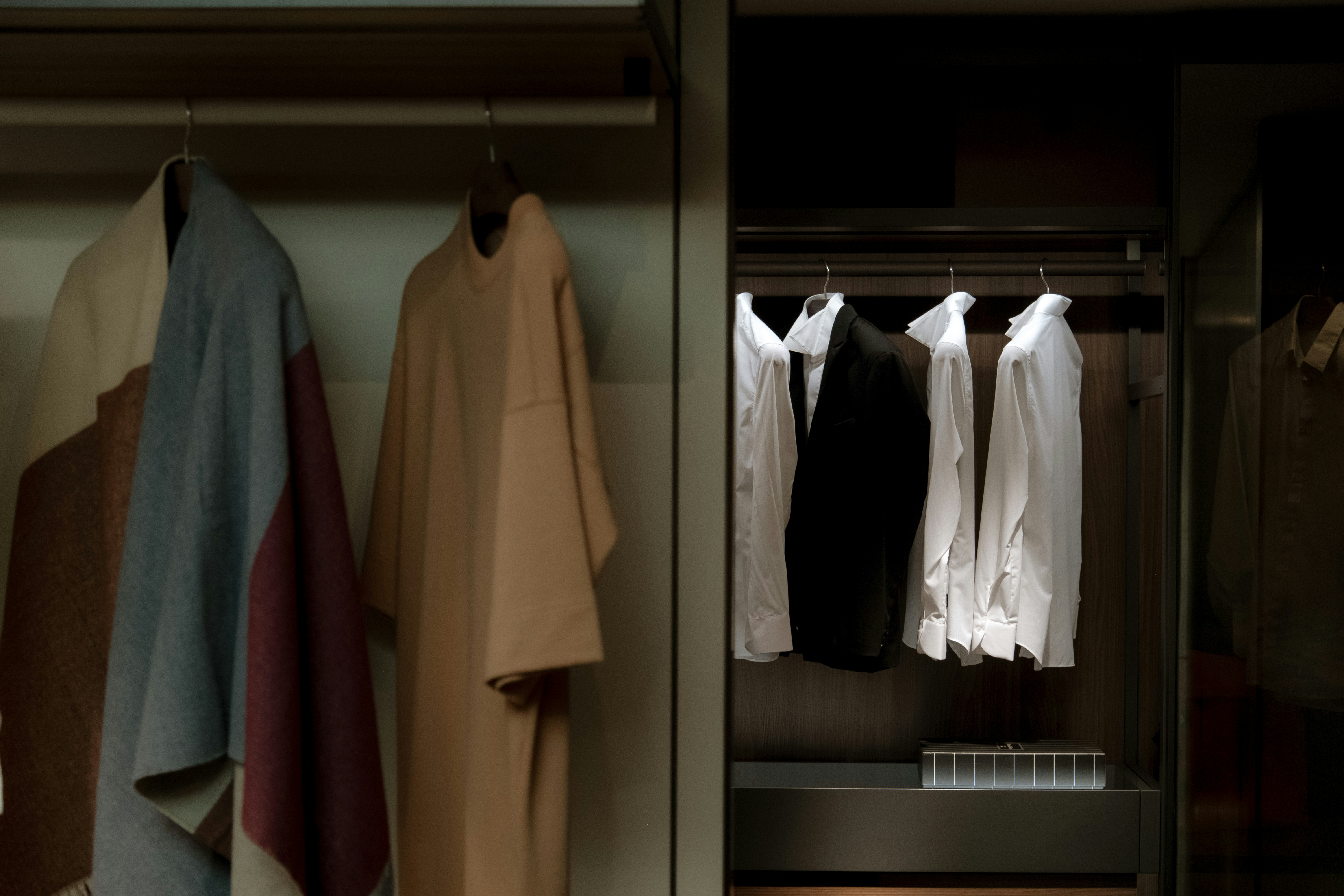
Moins de fatigue decisionnelle. Quand votre garde-robe est organisee, s’habiller demande moins d’energie mentale. Tout va ensemble. Tout vous va. Vous passez moins de temps debout devant votre placard et plus de temps a vivre votre vie.
Meilleure valeur. Cinq pulls a 200 euros portes 100 fois chacun coutent 10 euros par port. Vingt pulls a 50 euros portes 5 fois chacun coutent 10 euros par port. Le calcul est identique, mais l’experience est differente : les cinq bons pulls sont plus agreables, plus beaux et durent plus longtemps. Le minimalisme, bien fait, est finalement moins cher par port.
Impact environnemental. Le vetement le plus durable est celui que vous possedez deja. Une garde-robe plus petite de pieces frequemment portees a une fraction de l’empreinte environnementale d’une grande garde-robe d’articles rarement portes, independamment de la durabilite affichee de chaque piece individuelle.
Clarte. Quand vous arretez d’acheter des vetements dont vous n’avez pas besoin, vous liberez de l’espace mental, de l’espace physique et des ress
Comment en construire une
Phase 1 : L’audit (semaines 1-2)
N’achetez rien. Ne vous debarrassez de rien pour l’instant. Pendant deux semaines, chaque fois que vous portez quelque chose, retournez le cintre ou mettez l’article dans une pile designee << porte >>. A la fin des deux semaines, vous aurez des donnees objectives sur ce que vous portez reellement par opposition a ce que vous pensez porter.
La plupart des gens decouvrent qu’ils portent environ 20% de leur garde-robe 80% du temps. C’est normal — et c’est l’information la plus utile que vous puissiez avoir sur votre relation avec les vetements.
Phase 2 : La separation (semaine 3)
En vous basant sur vos donnees de port, separez votre garde-robe en quatre categories :
Garder (porte au cours des deux dernieres semaines) : Ces articles restent. Ils constituent votre garde-robe reelle.
Saisonnier (porte au cours des six derniers mois, pas au cours des deux dernieres semaines) : Des vetements hors saison que vous savez que vous porterez quand le temps changera. Rangez-les separement — sous le lit, dans une valise ou dans un autre placard. Les sortir de votre champ de vision quotidien rend votre garde-robe de travail instantanement plus gerable.
Peut-etre (pas porte depuis plus de 6 mois mais vous n’etes pas pret a vous en separer) : Mettez ces articles dans une boite. Placez la boite dans un endroit peu pratique — une etagere haute, le fond d’un placard. Programmez un rappel de calendrier dans trois mois. Si vous n’avez rien recupere de la boite d’ici la, donnez-la sans l’ouvrir.
Liberer (pas porte depuis plus d’un an, ne vous va pas, endommage au-dela de toute reparation) : Donnez, vendez ou recyclez. Soyez realiste : les vetements qui ne vont pas a votre corps actuel ne sont pas une motivation pour atteindre votre << poids ideal >> — ils sont de la culpabilite qui prend de la place. Les vetements qui necessitent des reparations majeures que vous avez l’intention de faire depuis six mois ne seront jamais repares. Laissez-les partir.
Phase 3 : La pause (mois 2)
Pendant un mois complet, n’achetez aucun vetement. Zero. Aucune exception. Cette pause sert deux objectifs : elle reinitialise vos habitudes d’achat, et elle vous oblige a travailler avec ce que vous avez deja. Vous decouvrirez des combinaisons creatives que vous n’aviez jamais envisagees parce que vous etiez toujours en train d’acquerir de nouvelles pieces au lieu d’explorer le potentiel de ce que vous possediez deja.
Cette phase est la plus difficile pour la plupart des gens. Le shopping est une habitude, un loisir et un mecanisme d’adaptation emotionnelle pour beaucoup. La pause vous force a trouver d’autres facons de gerer l’ennui, le stress ou le desir de nouveaute. C’est inconfortable — et c’est le but.
Phase 4 : Les ajouts intentionnels (mois 3+)
Apres la pause, vous pouvez recommencer a ajouter des pieces — mais avec intention. Avant tout achat, posez-vous ces questions :
-
Puis-je faire au moins cinq tenues avec ceci en utilisant ce que je possede deja ? Sinon, c’est une piece isolee qui cree plus de problemes qu’elle n’en resout.
-
Suis-je impatient de le porter demain ? Pas << un jour >>, pas << quand j’aurai perdu cinq kilos >>, pas << si j’avais les bonnes chaussures >>. Demain. Si vous n’etes pas impatient de le porter immediatement, vous ne le serez probablement pas plus tard.
-
Est-ce que cela remplace quelque chose d’use, ou est-ce que cela s’ajoute au total ? Si cela s’ajoute, qu’etes-vous pret a laisser partir pour faire de la place ? La regle d’un entre, un sort maintient votre garde-robe a une taille stable.
-
L’acheterais-je au prix fort ? Les soldes creent une urgence artificielle qui conduit a de mauvaises decisions. Si vous ne paieriez pas le prix fort, vous ne voulez pas vraiment l’article — vous voulez la sensation de faire une bonne affaire.
Maintenir le systeme
Une garde-robe minimaliste n’est pas un projet ponctuel — c’est une pratique continue. Chaque saison, faites un point rapide : qu’est-ce que vous n’avez pas porte ? Qu’est-ce qui a besoin de reparation ? Qu’est-ce qui ne correspond plus a votre vie ? L’entretien est leger parce que le systeme est propre, mais il exige de la constance.
Le rythme saisonnier : Au debut de chaque saison, sortez vos articles saisonniers stockes et faites un audit rapide. Essayez tout. Si quelque chose ne vous va plus ou si vous n’etes plus enthousiaste a l’idee de le porter, liberez-le avant qu’il ne reintegre votre garde-robe active.
L’habitude de reparation : Reparez immediatement les petits problemes — un bouton desserre, une petite dechirure, un ourlet tombe. Les vetements avec des dommages mineurs migrent vers le fond du placard et cessent d’etre portes. Une reparation de cinq minutes garde un vetement en rotation pendant des annees.
La regle de remplacement : Quand un article frequemment porte s’use, remplacez-le par la version de la plus haute qualite que vous pouvez confortablement vous offrir. Avec le temps, votre garde-robe se met naturellement a niveau en qualite sans necessiter un investissement massif d’un seul coup.
A quoi cela ressemble en pratique
Une garde-robe minimaliste fonctionnelle pour quelqu’un dans un climat a quatre saisons pourrait ressembler a :
- 8 hauts (melange de t-shirts, chemisiers et mailles)
- 6 bas (jeans, pantalons, jupes)
- 4 pieces d’exterieur (manteau, veste, blazer, cardigan)
- 3 robes ou combinaisons
- 6 paires de chaussures (baskets, bottes, mocassins, sandales, talons)
- 10 accessoires (foulards, ceintures, bijoux)
Cela fait environ 37 articles de base, en rotation saisonniere. Avec le stockage saisonnier, la garde-robe totale pourrait compter 50 a 60 articles, y compris les pieces hors saison. C’est assez de variete pour ne jamais s’ennuyer, mais assez petit pour que tout soit porte.
Ce que le minimalisme n’est pas
Le minimalisme n’est pas obligatoire. Vous n’avez pas besoin de posseder moins qu’un certain nombre d’articles pour etre une bonne personne. Vous n’avez pas besoin de porter uniquement des tons neutres. Vous n’avez pas besoin de renoncer a la mode, aux tendances ou au plaisir d’une belle robe neuve.
Le minimalisme, correctement compris, concerne l’intentionnalite. Il s’agit de posseder des choses parce que vous les avez choisies, pas parce qu’elles se sont accumulees. Il s’agit d’une garde-robe qui soutient votre vie plutot que de la compliquer. Si vous aimez les vetements et avez une collection large et tournante qui vous apporte une joie authentique — ce n’est pas du maximalisme, c’est de la curation. L’objectif n’est pas moins. L’objectif est seulement ce qui compte.