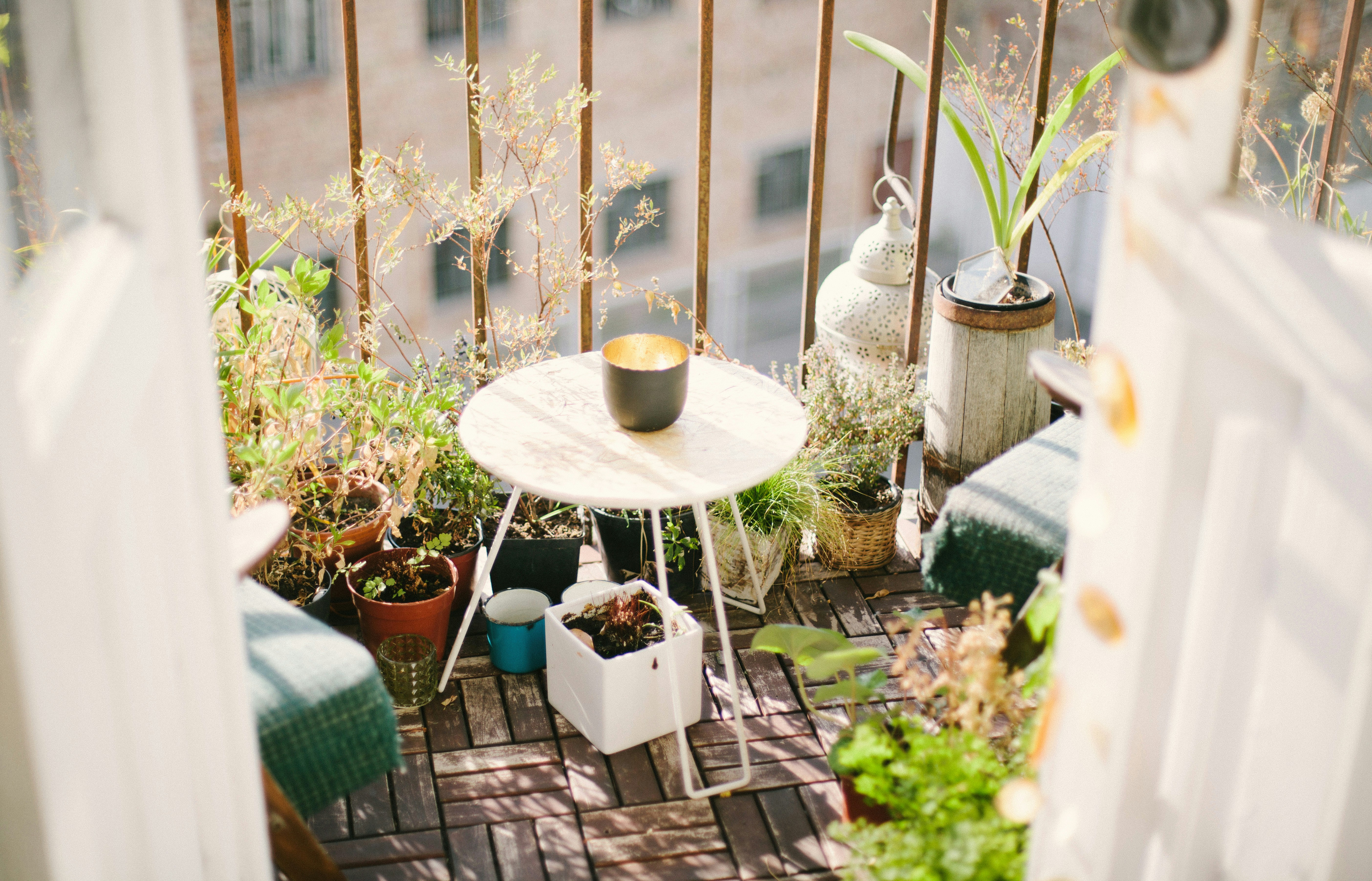
Meme le plus petit espace exterieur peut devenir un refuge luxuriant. Un balcon n’a pas besoin d’etre grand pour etre beau — il a juste besoin d’etre intentionnel. La plupart des petits balcons finissent comme des espaces de rangement negliges pour un etendoir et une plante triste a moitie morte. Mais avec quelques heures de travail et un plan clair, ce meme espace peut devenir le coin le plus reparateur de votre maison.
Au cours des deux dernieres annees, nous avons transforme des balcons aussi petits que 3 metres carres en pieces exterieures veritablement accueillantes. Voici le systeme complet — de la definition de votre objectif au choix des bonnes plantes, des meubles et de l’eclairage.
Etape 1 : Definissez votre objectif
Avant d’acheter une seule plante ou un seul meuble, repondez a une question : que voulez-vous reellement faire sur ce balcon ? La reponse faconne toutes les decisions suivantes. Un coin cafe du matin necessite une petite table et deux chaises confortables, des plantes parfumees (jasmin, romarin, lavande) et une orientation soleil du matin si possible. Une zone de detente du soir demande un seul siege confortable, un eclairage chaud et tamise et une protection visuelle contre les voisins. Une retraite de verdure maximale signifie autant de plantes que possible avec juste assez de place pour s’asseoir parmi elles. Le multifonction est le plus difficile a reussir : choisissez une utilisation principale et soyez impitoyable dans l’edition. Un balcon qui essaie de tout faire ne fait generalement rien de bien.
Etape 2 : Evaluez vos conditions
Le microclimat de votre balcon determine ce qui y prosperera. Avant de choisir des plantes, passez une journee a observer. Combien d’heures de soleil direct le balcon recoit-il ? Soleil du matin ou de l’apres-midi ? Est-il filtre par un arbre ou un batiment voisin ? Le plein soleil signifie 6 heures ou plus de soleil direct par jour ; le soleil partiel, 3 a 6 heures ; l’ombre, moins de 3 heures. Le vent : les etages superieurs sont nettement plus ventes que le rez-de-chaussee. Le vent arrache l’humidite des feuilles et du sol, donc les balcons ventes ont besoin de plantes plus resistantes a la secheresse et de pots plus lourds qui ne se renverseront pas. Exposition a la pluie : un balcon couvert signifie que vous controlez entierement l’arrosage ; un balcon decouvert recoit une irrigation naturelle mais peut necessiter une gestion du drainage. Temperatures extremes : les balcons aux etages superieurs peuvent devenir etonnamment chauds en ete a cause de la chaleur reflechie et froids en hiver a cause du refroidissement eolien.
Etape 3 : Travaillez a la verticale
L’espace au sol est la ressource la plus rare sur un petit balcon, donc montez. Des jardinieres murales montees sur le mur avec des supports sont l’option la plus efficace en termes d’espace. Assurez-vous que le mur peut supporter le poids du sol humide. Un treillis contre un mur supporte des plantes grimpantes — jasmin, clematite, jasmin etoile, passiflore — et cree un fond vert sans consommer d’espace au sol. Positionnez-le pour masquer la vue la moins attrayante. Les pots de balustrade utilisent la structure integree du balcon et sont parfaits pour les plantes retombantes (geranium lierre, romarin rampant, dichondra) qui cascadent vers le bas. Fixez-les solidement. Les paniers suspendus liberent entierement le sol. Choisissez des pots legers et un sol absorbant l’eau pour reduire le poids. Les supports a plantes a etages peuvent contenir 6 a 9 petits pots dans l’empreinte d’un seul, idealement positionnes dans un coin.
Etape 4 : Choisissez des plantes qui travaillent dur
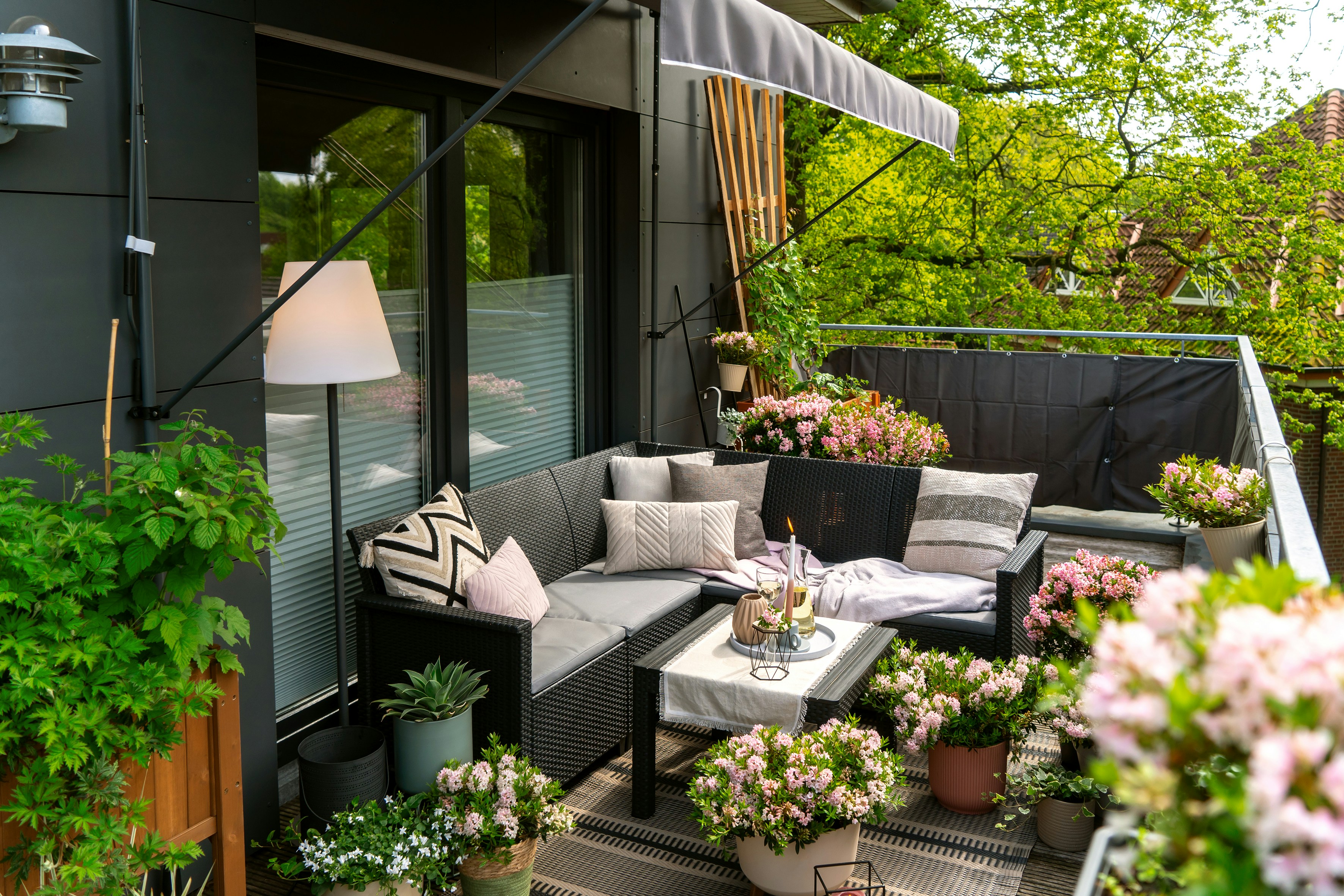
Sur un petit balcon, chaque plante doit gagner sa place. Voici les categories a considerer. Parfum : des plantes qui vous recompensent chaque fois que vous sortez. Le jasmin, la lavande, le romarin et les geraniums odorants prosperent tous en pots et liberent leur parfum lorsqu’on les frotte ou que le soleil les chauffe. Placez les plantes parfumees pres de l’endroit ou vous vous asseyez. Structure : une ou deux plantes plus grandes donnent au balcon un poids visuel et lui donnent l’impression d’etre une piece plutot qu’une collection de pots. Un cypres italien mince, un laurier-sauce en grand pot ou un Fatsia japonica pour les balcons ombrages. Couleur saisonniere : des plantes qui fleurissent en sequence pour maintenir l’interet tout au long de l’annee. Bulbes de printemps (tulipes, jonquilles en pots), annuelles d’ete (petunias, geraniums) et feuillage d’automne (heucheres, graminees ornementales). Comestibles : les herbes aromatiques sont les plantes comestibles les plus efficaces en termes d’espace. Le basilic, la menthe, la ciboulette, le thym et le romarin prosperent tous en pots. Les tomates cerises, les fraises et les piments fonctionnent aussi avec assez de soleil. Plantes retombantes : elles adoucissent les bords et creent du mouvement. Le lierre, la tradescantia, le collier-de-perles et le romarin rampant drapent les bords des pots. A eviter : les plantes qui perdent constamment leurs feuilles, celles qui necessitent un deadheading quotidien et celles qui poussent trop vite (bambou, sauf en pot avec une barriere racinaire). Choisissez des plantes qui correspondent a votre appetit d’entretien reel, pas a votre appetit aspirationnel.
Etape 5 : Choisissez des meubles qui s’adaptent
Le mobilier d’exterieur surdimensionne est l’ennemi d’un petit balcon. L’objectif est un siege confortable mais visuellement leger. Le mobilier pliable peut etre range quand vous avez besoin d’espace au sol et resorti pour s’asseoir. Une table de bistro pliante de 60 cm de diametre avec deux chaises pliantes est la solution classique. Les chaises empilables offrent la meme fonction avec un mecanisme different et sont souvent plus confortables. Un banc etroit contre le mur, de 30 cm de profondeur, prend tres peu de place mais offre un siege genereux et fait egalement office de support a plantes. Coussins et textiles : ajoutez exactement un element textile. Un petit coussin resistant aux intemperies sur le banc, ou un tapis d’exterieur fin (60 x 90 cm) sous les pieds. Un element doux donne l’impression que l’espace est meuble ; plus d’un commence a sembler encombre.
Etape 6 : Eclairez pour l’atmosphere
Le moyen le plus rapide de gacher une soiree sur le balcon est un eclairage de plafond agressif. A la place, utilisez des guirlandes solaires drapees au-dessus ou le long de la balustrade — elles se rechargent le jour et s’allument automatiquement au crepuscule. Le blanc chaud (2700K-3000K) est la temperature de couleur la plus flatteuse. Une petite lanterne rechargeable sur la table fournit une lumiere focalisee et portable pour lire ou manger. Des guirlandes lumineuses tissees dans les plantes creent un effet de lumiere tamisee magique la nuit. Des lampes a pince rechargeables s’attachent a la balustrade ou a un support de plantes pour une lumiere de lecture directionnelle.
Etape 7 : Ajoutez de l’intimite
Si votre balcon est donne sur les voisins, vous avez besoin d’intimite pour vous sentir a l’aise. Un ecran en bambou ou en roseau fixe a la balustrade avec des colliers de serrage offre une intimite instantanee et peu couteuse. Il prend une patine gris argente avec le temps et dure 2 a 3 ans. Des plantes hautes en rangee creent un ecran vivant : bambou en jardiniere, hautes graminees ou une rangee de cypres italiens en pots assortis. Des rideaux d’exterieur en tissu resistant aux intemperies peuvent etre tires quand vous voulez de l’intimite et ouverts quand vous voulez la vue.
Realite de l’entretien
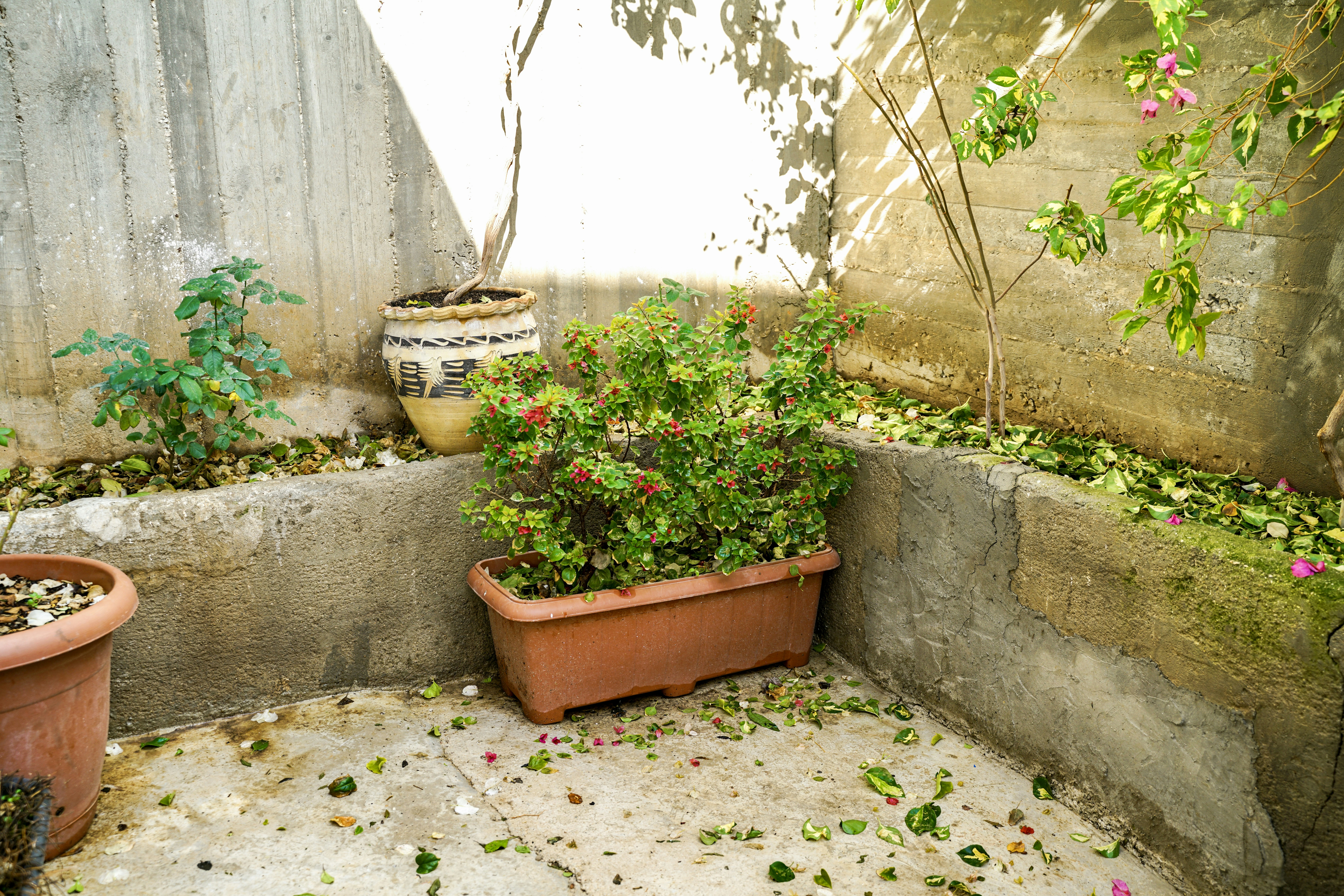
Un petit jardin de balcon necessite environ 15 minutes de soins deux fois par semaine — arrosage (quotidiennement par temps chaud), deadheading des fleurs fanees, balayage des feuilles et taille occasionnelle. Choisissez des plantes qui correspondent a votre engagement d’entretien reel. Une collection de plantes mortes est pire que pas de plantes du tout. Installez un systeme d’irrigation simple si vous voyagez frequemment : un programmateur fixe a un robinet, avec des lignes de goutte-a-goutte vers chaque pot. Alternativement, les pots a arrosage automatique reduisent la frequence d’arrosage de maniere significative. Commencez petit, vivez avec pendant un mois et ajoutez progressivement. Les meilleurs balcons evoluent avec le temps, faconnes par la maniere dont vous les utilisez reellement plutot que par la maniere dont vous imaginez que vous les utiliserez.