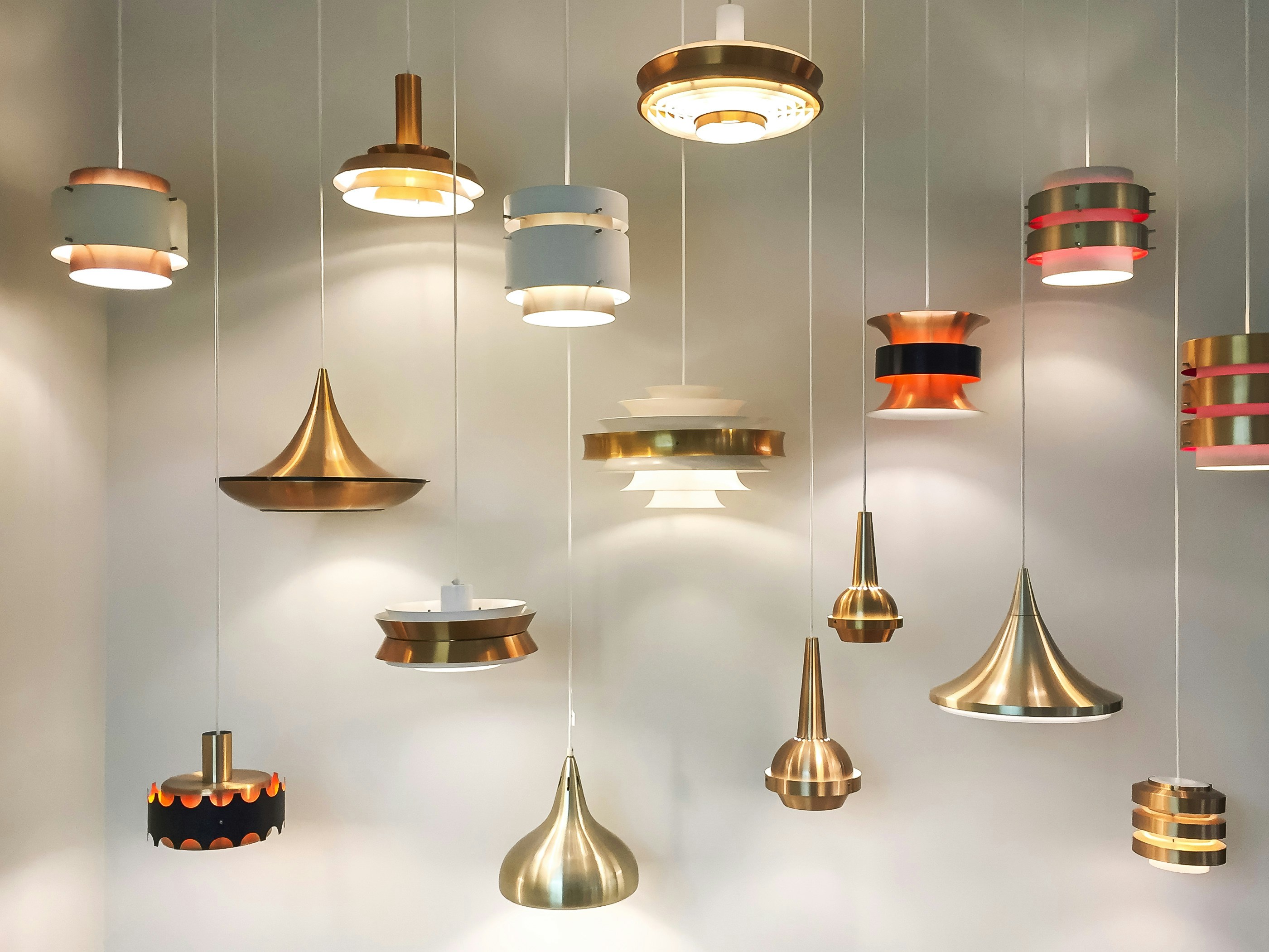
L’eclairage est l’element le plus sous-estime du design d’interieur. Une piece avec de beaux meubles, des couleurs de peinture parfaites et de l’art reflechi semblera toujours froide et peu accueillante sous une lumiere de plafond agressive. La meme piece, eclairee avec une lumiere chaude et superposee a differentes hauteurs et intensites, donne l’impression d’un espace ou l’on veut passer du temps. L’eclairage n’est pas une reflexion apres coup — c’est la base sur laquelle chaque autre choix de design brille ou echoue.
La plupart des maisons sont eclairees par un seul luminaire central au plafond, projetant des ombres dures et peu flatteuses et creant une atmosphere plate et institutionnelle. Ce guide explique comment superposer la lumiere — le changement le plus transformateur que vous puissiez apporter a n’importe quelle piece — et comment choisir les bons luminaires pour chaque espace.
Les trois couches de lumiere
Une piece bien eclairee utilise trois couches distinctes qui fonctionnent ensemble. La lumiere ambiante est le niveau d’eclairage de base de la piece, generalement fournie par des luminaires de plafond. Elle ne devrait pas etre la seule lumiere — elle devrait etre douce et diffuse, sur un variateur. La lumiere de tache est dirigee vers des zones de travail specifiques : un fauteuil de lecture, un plan de travail de cuisine, un bureau. Elle est plus brillante que la lumiere ambiante et focalisee. La lumiere d’accent met en valeur des elements specifiques : une oeuvre d’art, un detail architectural, une bibliotheque, une plante. Elle cree de la profondeur et du drame.
Piece par piece
Salon : Plafonniers encastres sur variateur pour l’ambiante. Un lampadaire a cote de chaque coin salon, le bas de l’abat-jour a environ 100-110 cm du sol. Des lampes pour tableaux au-dessus des oeuvres d’art, une petite lampe sur une console.
Cuisine : Spots encastres pour l’ambiante. Eclairage sous les meubles hauts — le plus important apres le plafond — il eclaire le plan de travail la ou vous travaillez reellement. Des suspensions au-dessus de l’ilot.
Chambre : Un luminaire central sur variateur, utilise uniquement a faible luminosite. Des lampes de chevet pour lire. Des appliques murales orientables economisent l’espace de la table de nuit.
Salle de bain : Des appliques a hauteur des yeux de chaque cote du miroir — l’eclairage de salle de bain le plus flatteur. Un plafonnier central sur un interrupteur separe.
Temperature de couleur
2700K (blanc chaud) pour les salons, chambres et salles a manger. 3000K (blanc doux) pour les cuisines et salles de bain. Jamais de 4000K et plus dans les pieces ou vous vous detendez. Mettez un variateur sur chaque plafonnier — cela coute 15-25 euros et transforme la fonctionnalite de l’eclairage d’une piece.
Temperature de couleur detaillee
La couleur de la lumiere est mesuree en Kelvin (K). C’est la specification la plus importante lors de l’achat d’ampoules. 2700K (blanc chaud) : la couleur des ampoules a incandescence traditionnelles — chaude, doree, flatteuse. Pour les salons, chambres et salles a manger. 3000K (blanc doux) : legerement plus froide mais toujours chaude. Pour les cuisines, salles de bain et bureaux a domicile. 3500K-4000K (blanc neutre) : nettement plus froide. Pour les buanderies, garages et eclairage de tache dans les ateliers. 5000K et plus (lumiere du jour) : tres bleu-blanc. Pour les endroits ou la precision des couleurs est importante. Dure et peu flatteuse pour les espaces de vie.
L’erreur d’eclairage la plus courante est d’utiliser des ampoules de 4000K et plus dans les espaces de vie, creant une atmosphere institutionnelle et clinique. Pour toute piece ou vous vous detendez, utilisez 2700K ou 3000K.
La regle du variateur
Chaque plafonnier devrait etre sur un variateur. Les variateurs sont peu couteux (un interrupteur variateur de base coute 15-25 euros) et transforment la fonctionnalite de l’eclairage d’une piece. Une lumiere a pleine puissance pour nettoyer, a 50% pour la conversation, a 20% pour regarder un film. Si vous ne faites rien d’autre pour ameliorer l’eclairage de votre maison, installez des variateurs. L’amelioration la plus simple : un variateur sur chaque plafonnier et un lampadaire dans chaque coin salon. Cout total des deux : moins de 200 euros. Impact sur l’ambiance de chaque piece apres la tombee de la nuit : transformateur.
Choisir les luminaires
Pour un eclairage de qualite sans se ruiner : les lampadaires a bras oscillant sont ideaux pour les coins lecture, les appliques murales orientables liberent les tables de nuit, les suspensions basses definissent les zones dans les pieces ouvertes, les spots encastres offrent un eclairage ambiant discret et les rubans LED sous les meubles ou derriere les ecrans ajoutent une lumiere d’accent fonctionnelle. Evitez les luminaires uniquement decoratifs qui n’eclairent pas reellement — un beau luminaire qui ne fournit pas une lumiere utile est une sculpture couteuse, pas un eclairage.
Choisir les luminaires

Pour un eclairage de qualite sans se ruiner, privilegiez la fonction sur la forme. Les lampadaires a bras oscillant sont ideaux pour les coins lecture car ils dirigent la lumiere precisement la ou vous en avez besoin. Les appliques murales orientables liberent les tables de nuit et fournissent une lumiere de lecture reglable. Les suspensions basses definissent les zones dans les pieces ouvertes et creent une atmosphere intimiste au-dessus des tables a manger ou des ilots de cuisine. Les spots encastres offrent un eclairage ambiant discret sans l’encombrement visuel des luminaires de plafond. Les rubans LED sous les meubles de cuisine ou derriere les ecrans ajoutent une lumiere d’accent fonctionnelle.
Evitez les luminaires uniquement decoratifs qui n’eclairent pas reellement — un beau luminaire qui ne fournit pas une lumiere utile est une sculpture couteuse, pas un eclairage. Le meilleur eclairage est celui que vous ne remarquez pas — vous remarquez seulement que la piece est agreable a vivre.