
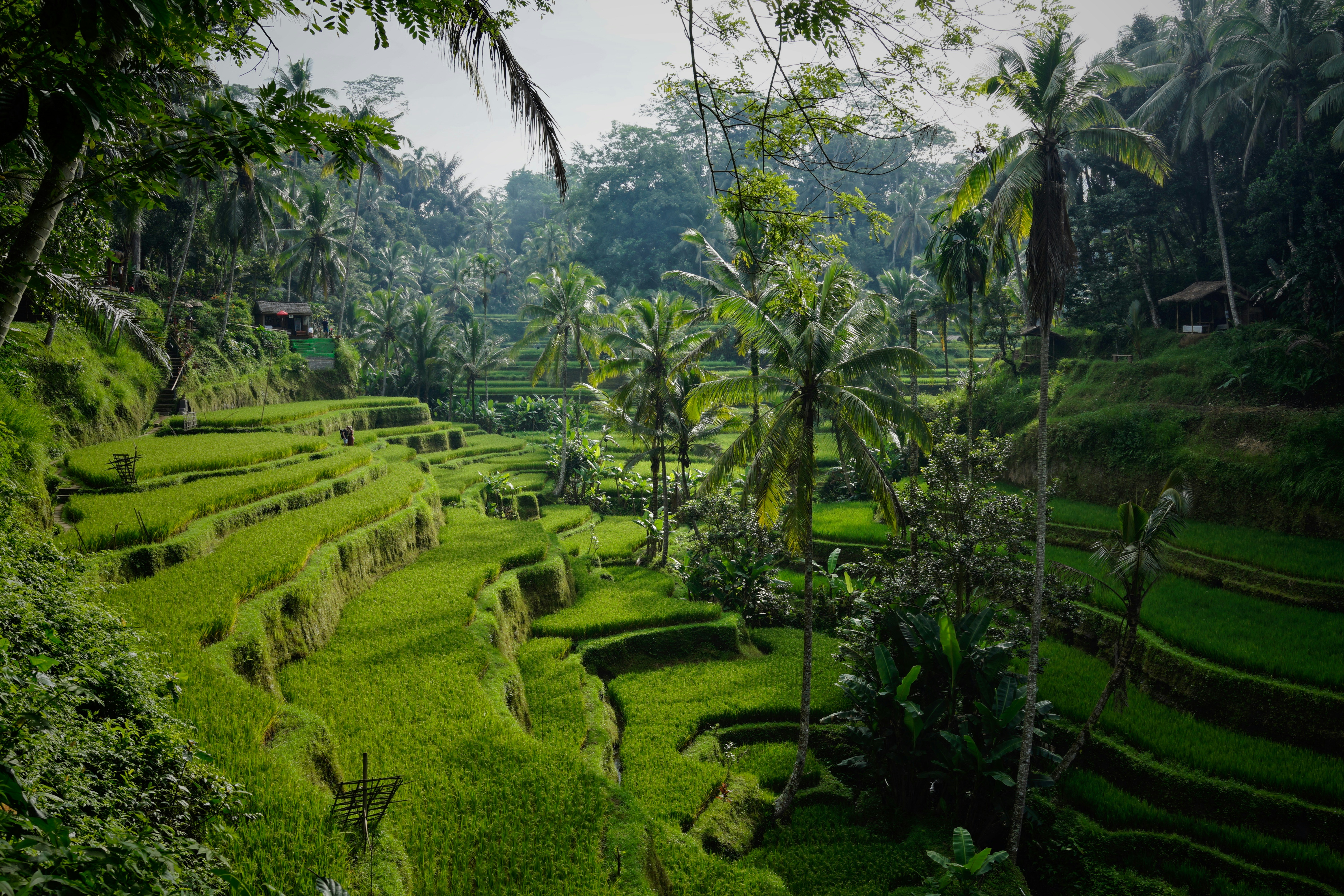
Bali a un probleme de reputation — et un probleme de surfrequentation. Canggu, Seminyak et les rues principales d’Ubud ressemblent desormais plus a un campus de coworking mondial qu’au paradis insulaire promis par les affiches de voyage. La circulation sur le couloir Canggu-Seminyak peut vous prendre deux heures de votre journee. Les fameux beach clubs facturent des droits d’entree qui sembleraient eleves a Londres ou a New York. Les rizieres de Tegallalang sont tellement envahies de touristes et d’installations de balancoires a photos que l’on fait litteralement la queue pour la vue.
Mais Bali s’etend sur plus de 5 700 kilometres carres — a peu pres la taille du Delaware aux Etats-Unis, ou trois fois la taille du Grand Londres. Aventurez-vous au-dela du triangle bien rode de Canggu-Seminyak-Ubud, et vous trouverez le Bali qui vit encore au rythme de l’ile. Des endroits ou le son le plus fort est celui de l’eau qui coule, ou les ceremonies sont plus nombreuses que les touristes, et ou le lien avec la culture extraordinaire de l’ile semble authentique plutot que mis en scene.
Voici quatre destinations qui offrent une experience balinaise plus profonde et plus raffinee — chacune accessible depuis l’aeroport mais a des annees-lumiere des foules qui definissent le sud de Bali.
Sidemen : Ubud sans la foule
A environ 90 minutes a l’est d’Ubud, Sidemen offre les memes rizieres en terrasses, les vallees parsemeess de temples et les vues montagneuses brumeuses — avec peut-etre dix pour cent des visiteurs. Voici ce qu’etait Ubud il y a vingt ans, avant l’arrivee des studios de yoga, des cafes vegans et de l’infrastructure pour nomades numeriques.
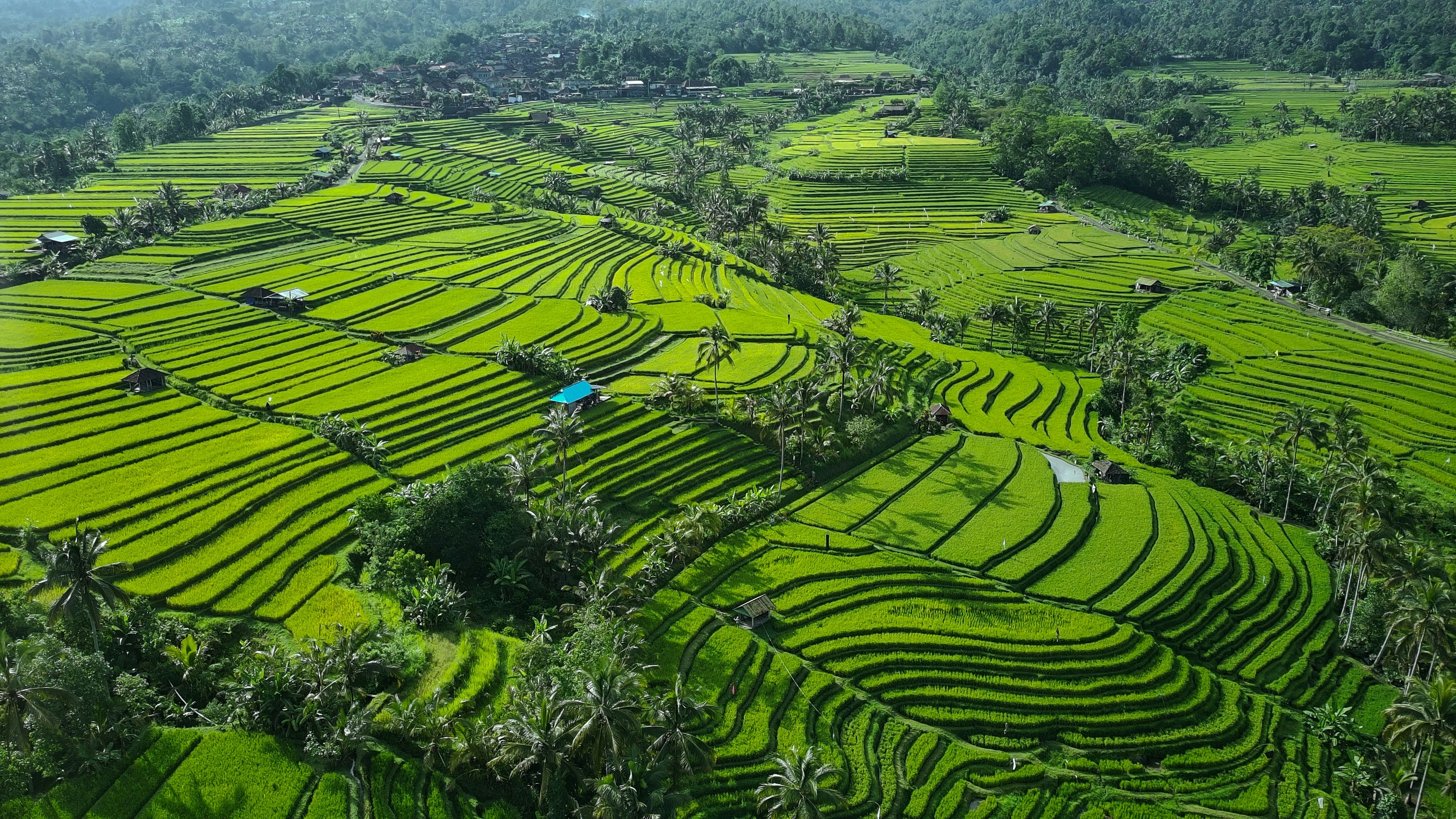
La vallee de Sidemen se trouve dans l’ombre du mont Agung, le volcan le plus haut et le plus sacre de Bali. Le terrain est spectaculaire : des ravins abrupts creuses par les rivieres, des collines terrassees pour la culture du riz qui suivent les contours du terrain comme une carte topographique verte, et la silhouette toujours presente de l’Agung dominant l’horizon nord. Le fond de la vallee est sillonne de sentiers pedestres qui relient les villages, les temples et les rizieres — on peut marcher pendant des heures et rencontrer plus de canards que de personnes.
Ou se loger : De petites maisons d’hotes et des complexes familiaux sont la norme ici. Il n’y a pas de mega-hotels, pas de chaines internationales et — pour l’instant — pas de grands projets de developpement. La plupart des hebergements sont construits a flanc de colline et orientes vers la vue. On se reveille au chant des coqs et aux repetitions de gamelan qui derivent a travers la vallee, pas a la circulation.
Que faire : La promenade matinale a travers les rizieres avant que la chaleur ne s’installe est essentielle — la lumiere est doree, l’air est frais, et vous croiserez des agriculteurs s’occupant de leurs champs et faisant des offrandes aux petits sanctuaires. L’industrie locale du tissage merite egalement d’etre exploree ; Sidemen est connue pour le songket, un textile traditionnel tisse a la main avec des fils d’or et d’argent, et vous pouvez visiter des ateliers ou des femmes tissent sur des metiers a sangle en utilisant des techniques transmises de generation en generation.
Notes pratiques : Sidemen a des options de restauration tres limitees en dehors des maisons d’hotes, et la plupart des endroits ferment tot. Il n’y a pas de vie nocturne digne de ce nom. Si vous avez besoin de stimulation constante et de variete de restaurants, ce n’est pas votre destination. Si vous voulez lire, marcher et decompresser, c’est parfait.
Pemuteran : pour les passionnes du monde sous-marin
Sur la cote nord-ouest de Bali, a environ quatre heures de l’aeroport, Pemuteran se trouve a la lisiere du parc national de Bali Ouest. L’attraction principale est le jardin de temples sous-marin — l’un des plus grands projets de restauration de recifs coralliens au monde, qui fait egalement office de site de snorkeling et de plongee extraordinaire. La plage de sable noir est calme, l’eau est tranquille (protegee par la geographie de la baie), et le rythme est assez lent pour que vous arretiez de verifier l’heure.
Le projet de restauration corallienne de Pemuteran merite une mention speciale. A partir de l’an 2000, les communautes locales, les operateurs de plongee et les biologistes marins ont collabore pour restaurer les recifs qui avaient ete devastes par la peche au cyanure et le blanchissement d’El Nino de 1998. En utilisant la technologie Biorock — des courants electriques de faible tension qui stimulent la croissance corallienne — ils ont construit un paysage sous-marin qui abrite aujourd’hui une vie marine florissante. Faire du snorkeling ici signifie flotter au-dessus de structures incrustees de coraux a la fois transplantes et naturellement recrutes, entoures de poissons de recif, et parfois apercevoir des tortues de mer.
Ou se loger : De petits complexes de plage bordent la baie. La plupart disposent de leur propre equipement de snorkeling et de petits bateaux pour les excursions vers l’ile de Menjangan. Les hebergements sont confortables mais pas luxueux — l’attrait est le cadre, pas la competition sur le nombre de fils.
Que faire : L’ile de Menjangan offre la meilleure plongee sur tombant de Bali, avec un courant minimal et une visibilite qui depasse regulierement 30 metres. Meme si vous n’etes pas plongeur, le snorkeling a Menjangan est exceptionnel — le recif commence directement au bord de l’eau, et le tombant dans l’eau bleu profond est spectaculaire. Sur terre, le parc national de Bali Ouest propose de la randonnee, de l’observation des oiseaux (le mainate de Bali, une espece endemique en danger critique d’extinction, est reintroduit ici) et des paysages de savane qui ne ressemblent en rien au Bali tropical que la plupart des gens imaginent.
Munduk : brume, clous de girofle et cascades
Munduk se trouve dans les hautes terres centrales de Bali a environ 800 metres d’altitude. Il fait assez frais pour avoir besoin d’une veste legere le soir — un veritable luxe dans le Bali tropical. La region est entouree de plantations de clous de girofle et de cafe, et l’air porte une legere note epicee que vous associerez a jamais a cet endroit. Sillonne de sentiers de randonnee qui relient les cascades, Munduk est le secret le mieux garde de Bali pour les randonneurs et tous ceux qui ont besoin d’une pause de l’humidite tropicale.
La presence coloniale hollandaise est encore visible dans l’architecture de Munduk — plusieurs maisons de plantation d’origine subsistent, certaines converties en maisons d’hotes. La region etait une importante zone de culture du cafe et des epices pendant la periode coloniale, et l’infrastructure de cette epoque — routes, irrigation et certains batiments — faconne encore le paysage.
Ou se loger : Des maisons d’hotes de style colonial hollandais avec vue sur les montagnes, souvent gerees par des familles depuis des generations. Beaucoup sont situees dans des plantations de cafe ou de clous de girofle en activite. Le climat plus frais signifie que l’eau chaude et les couvertures plus epaisses sont la norme, ce qui n’est pas toujours le cas sur la cote de Bali.
Que faire : Le sentier en boucle des cascades — trois chutes d’eau reliees par une marche d’environ trois heures a travers la jungle — est l’attraction principale. Les trois chutes (Melanting, Golden Valley et Labuhan Kebo) ont chacune un caractere distinct. Le sentier les relie a travers des plantations de cafe et de clous de girofle, des bosquets de bambous et des parcelles de foret primaire. Engagez un guide local pour l’experience interpretative — vous en apprendrez plus sur les plantes, l’histoire et l’ecologie que vous ne le feriez en marchant seul, et vous mettrez de l’argent directement dans l’economie villageoise.
Amed : sable noir, eau bleue
Sur la cote nord-est de Bali, Amed est un chapelet de villages de pecheurs le long d’une cote de sable volcanique noir. L’attraction principale est le snorkeling et la plongee libre — une serie de recifs et de baies peu profondes offrent certains des paysages sous-marins les plus accessibles de Bali, y compris l’epave de l’USAT Liberty a Tulamben, regulierement classee parmi les meilleures plongees de rivage au monde. Mais meme si vous ne mettez jamais le visage dans l’eau, Amed vaut le detour pour le rythme, les vues sur l’Agung a travers le detroit de Lombok et les traditions de fabrication du sel qui sont encore pratiquees le long de la cote.
Ou se loger : De simples bungalows de plage et de petits complexes, pour la plupart possedes par des familles locales. L’ambiance est decontractee et sans pretention.
Que faire : Visitez les sauniers du village d’Amed, qui utilisent encore des methodes traditionnelles pour evaporer l’eau de mer dans des auges en bois sculptees. Achetez un sac directe
Notes pratiques pour toutes les destinations
Toutes ces destinations sont accessibles en chauffeur prive depuis l’aeroport (reservez via votre hebergement pour de meilleurs tarifs). Les routes sont bonnes mais sinueuses dans les hautes terres. Duree des trajets : Sidemen 90 minutes, Candidasa 90 minutes, Amed 2h30, Munduk 3h, Pemuteran 4h. Louez un scooter si vous etes a l’aise — cela vous donne une liberte qu’un chauffeur ne peut pas offrir. La saison seche (avril-octobre) est ideale.
Connectivite : Le WiFi est disponible dans la plupart des maisons d’hotes mais peut etre lent et peu fiable. Telechargez des cartes hors ligne et le contenu dont vous avez besoin avant de quitter la zone de l’aeroport. C’est particulierement vrai pour Pemuteran et Munduk.
Les coins plus tranquilles de Bali valent l’effort supplementaire pour les atteindre. Ils offrent ce que le sud surdeveloppe ne peut plus offrir : de l’espace, du silence et un lien authentique avec l’une des cultures insulaires les plus extraordinaires du monde.